Categories
Next Generation Ministry

You don’t have to advertise “Great”

BuzzFeed News recently reported an article about a little item that has taken the world by storm. Below is how the article starts:

Somehow, the Great Fidget Spinner Frenzy of 2017 managed to burn its way across the country without a major retailer, TV advertisement or brand getting involved. It wasn’t the first time, and it won’t be the last. And here’s the looming problem, for everyone from toy stores to government regulators: products can now reach millions of people before anyone really knows anything about them.

Consider the hoverboard. The hit viral gadget of 2015 rose to international prominence — and fell into relative obscurity — before big toy brands or retailers could stamp their names on it. Or look at vaping, which has become a national pastime without a major brand or retailer getting a piece of it.

Like the hoverboard and other fads that are here today and gone tomorrow, the fidget spinner craze will eventually fizzle out. Pop star popularity is also transient. But whether it’s a great toy or a great entertainer, you instantly recognize greatness for what it is. Then you go and tell all your friends about the greatest movie you ever saw, the greatest song you ever heard, the greatest car you ever drove, or the greatest toy you ever played.

What about the greatest cereal you ever ate? Frosted Flakes, right? They’re Greattttttttttttttt! Ok, maybe I’m taking things overboard, but I think you get the point. Great things sell themselves. You can advertise, market, and tell everyone you meet on the street about your product, but if it is not great, who cares?

Greatness is something that stands out in a crowd. The cream rises to the top. How else do you explain how the A&W root beer float became such a hot item? I can see the cream now. It’s easy to spot talent too. There’s no need to find a job if job offers are flooding in. I don’t know why, but right now I’m thinking of the Lending Tree commercial, “why go crawling to the bank when the bank can come crawling to you?”

Next Generation Ministry (NGM) is Great! Unlike gadgets that become the latest craze for just a short while, I think NGM’s shelf life will be much longer. Ministry models often do phase out over time, but their run is usually longer than two to three years. For instance, modern-day youth ministry is still present in our postmodern times. Who can forget the youth choirs, the packed churches, and the kicking bus ministry of the 1970’s? Though our churches are not as packed, many churches still have a youth choir and run a bus ministry. And we’re talking over 65 years have passed since then. Yes, NGM is here to stay and I think for a long time!

The wave of the future is here! NGM is relatively new to the ministry circuit and in its infancy stages. But as one of its trailblazers, I forecast that the bandwagon will soon follow. Why? Because you don’t have to advertise “Great”.
Categories
Next Generation Ministry

Security Matters

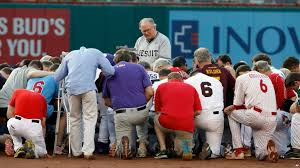
In light of last week’s horrific event, I thought it a good idea to write about the importance of protecting our students in an increasingly dangerous world. If adults, especially congressmen and women of our great nation, need security while playing baseball, how much more so do our children and youth? Protecting our young should always be a first priority in next generation ministry.


Students are used to practicing lock-down drills at schools. Students are all too aware of bomb threats and the protocols that go along with such a threat. In fact, not only is there a password given over a school intercom to notify teachers of a threat, there are different passwords given for different threat levels. And students know all the procedures that follow as they have rightfully been forced to incessantly practice for any given situation. With all of the hassle, it’s a wonder that students ever have time to learn anymore.

But in today’s world, the hassle is necessary. It may take longer for parents and students to enter in and exit out of school, but safety has to come first. The same should be true at churches and for next generation ministry. Security starts with protecting infants, toddlers, and preschoolers. Parents should be required to sign their students in and made aware of the policies concerning drop-off, pick-up, and emergency procedures. Many parents of preschoolers are given beepers, so that if something happens to their child in the middle of the worship service, they can immediately respond.

All next generation leaders (volunteers who work with children and youth) should undergo a background check. This rule applies for leaders who work with the next generation every week (small group leaders, preschool workers, etc.) and for leaders who infrequently work with students (i.e., leaders who just help with summer camps, mission trips, etc.). Most churches have a policy in place requiring new members to have belonged to a church for six months before they are allowed to work with any of the church’s children or youth.

Next generation pastors aren’t CEO’s who are trying to run a student enterprise. No, first and foremost, next generation pastors are shepherds of their sheep. They are willing to take all necessary measures to protect their flock and that includes dying themselves. Thank God for the Capital Area police team that was willing to lay their life on the line. If they had not, twenty to thirty congressmen would have been massacred. There is no greater love for one than to lay down his or her life for his or her friends (John 15:13). Churches represent easy targets for terrorists and other like-minded crazy and deranged people, such as last week’s shooter in Alexandria, VA.

Last week, I did some kingdom-building work by helping a local church (not my own) conduct a mega-sports camp. I was impressed with the high security measures that the church put in place for the event. Some students might have thought the measures to be extreme, but we pastors and leaders understand that times have changed. On the last night (parent night), it was comforting to see a cop car parked in front of the church. Not only do parents feel comfortable about dropping their kids off at a church that takes security seriously, kids feel safe, and that is really what matters. Not to be overlooked, security measures also impact spiritual results. Last week, I saw eleven kids come to know Jesus for the first time in their life!

This weekend, I get the privilege of helping to work a block party event hosted by another church that I am not a member of. Will they have taken steps to guarantee the safety of all in attendance? I do not know, but I do know security matters.

Categories
Next Generation Ministry

Episode IV: NGM

A long time ago in a galaxy far far away . . .  Like the intro to the epoch movie Star Wars, I started my first gig as a youth minister at the turn of the millennium. It was the year 2000. I was young and naïve, but somehow God used me to begin and then build up a youth group (that’s what we called it then). I have learned since that youth groups are social clubs like FFA, 4H, and ball teams. Youth ministries serve their world, their communities, their schools, their church, and each other. Youth groups are about themselves. Think games and pizza. Youth ministries are about loving and serving both God and others. Think missions!

As terminology and the profession of youth ministry evolved, I did as well. For many years, I resisted the notion of attending seminary. I did not see the need for it and God was blessing my ministry. But after much prayer and encouragement from others, I finally gave in. A letter from a Pastor in Macon, GA stuck with me as his written words kept ringing in my ears . . . “a call to the ministry is a call to be equipped for the work of the ministry.” So I called Southeastern Baptist Theological Seminary (SEBTS) in 2005 and asked what they had to offer for training in youth ministry. They told me the closest track they had was called Christian Education and that the plan was to unveil a degree offering for youth ministry in the near future.

Even though SEBTS had no degrees for youth ministry, I decided to enroll and go for my M Div. in Christian Education since I also shared a passion for working with youth in a Christian school setting. After working some in a Christian School and then graduating from SEBTS in 2009, I began working as a minister of children, youth, and education in 2010. I had to wear many hats, but my main emphasis was leading Youth on Mission or building a missional “student ministry” (notice the name change again). Now by this time, SEBTS had lived up to their word and were offering M Div.’s in Student Ministry. I worked full-time until the end of 2013, but near the end of my tenure, I felt God saying “family ministry.”

Being missional was still important, but I knew more than ever, God was transitioning a movement in His Church from “student ministry” to “family ministry.” Ministers like Timothy Paul Jones, Brian Haynes, Jay Strother, Steve Wright, and others were found promoting the family-equipping ministry model.

Around the beginning of 2015, I began my advanced studies at SEBTS in next generation ministry. Next generation ministry was more than “student ministry” and it was more than “family ministry.” NGM was the best of both worlds and more! Students were defined in terms of more than just children or youth and family ministry was essential. Silos were broken, leaders were valued, and disciples were made.

I can attest to the difficulty of working as a youth minister in my early 20’s and working with silos in my early 30’s. After all, it is difficult for a 20-year old to relate to parents and a person of any age to break down silos. Next generation ministry is different than youth or student ministry in that it requires a leader who is experienced in both ministry and life.

I was watching a next generation sport today called soccer (I know its an old sport but its catching on like fire in the USA). An advertisement from today’s big game, the UEFA Champions League Final, stood out to me and may be an ad you remember while watching a football game. The ad was a beer commercial and it said, “it takes 15 years to be a Heineken brew-master.”

That’s the way I feel about being a next generation pastor. To be able to work well with young adults, parents, leaders and students requires someone at least the age of 35 or someone who has about 15 years experience. 20-year olds should still be given the opportunity, like I was, to minister to youth. But youth ministry is not the same as next generation ministry. Youth are part of the next generation, but youth ministry is just one part of the whole in the big picture of next generation ministry. Next generation pastors must be strong in ministry to preschool, college, singles and married young adults as well. I have been a next generation pastor for over two years now and “am still learning” as the commercial went on to say. Youth ministry . . . student ministry . . . family ministry . . . next generation ministry . . . what lies beyond the final frontier? Only God knows . . .

Categories
Next Generation Ministry

Congratulations Graduates!

Numbers 15:37-39 – “The Lord said to Moses, “Speak to the Israelites and say to them: ‘Throughout the generations to come you are to make tassels on the corners of your garments with a blue cord on each tassel. You will have these tassels to look at and so remember all the commands of the Lord, so that you may obey them and not prostitute yourselves by going after the lusts of your own hearts and eyes.

Graduation Day—a day mixed with emotions. All involved—parents, teachers, administrators, students—carry with them a bittersweet feeling on Graduation Day. It is both a happy and a sad moment. The sun is shining, but the rain is falling. If you are really struggling, open up to the Book of Psalms and begin reading. In many instances, Graduation Day, a milestone event, is merely a symbol that little Billy or Sally has grown up. Graduates not only leave their old school behind never to return, but often leave home (“empty nest”), only coming back on occasion.

Graduation Day is a special time for me this year! My niece graduates from high school tomorrow and then sets sail for UGA, the University of Georgia. I am happy for my niece’s accomplishments and achievements but sad to have seen her grow up so quickly. When she flips the tassel and throws the hat up, it’s time for a new part of her journey to begin.

Reading the biblical passage above struck me in a strong way this past week. The tassel did not represent graduation for the Israelites and the tassel was not attached to a graduation cap. However, I hope upcoming graduates understand that when they they finally flip their tassel, they will look it and recount God’s faithfulness to them and remember his commands. College life will test one’s commitment to Christ in many ways. Graduates who recognize that God was with them through high school will understand that God will be with them through college. Unlike men, God does not change. The big theological word that we use to explain God’s unchanging nature is immuatability. I am glad that God does not change but I am even more glad that God does not leave or forsake us (Heb 13:5). Life is ever changing. Generations come and generations go, but God’s faithfulness remains.

In NGM, we celebrate milestone events! Graduation is just one such milestone in a young person’s life. Next generation leader, have you ever thought about what you want your church graduate to look like when he or she graduates from your ministry? If not, you should have. What is the end goal? The end goal should be to develop a fully committed follower of Christ. If you’ve done your job right, you have worked with parents, children, students, and leaders for eighteen years (if you’ve been serving that long) just for this moment! And though the discipleship process never ends, it becomes clear to all that you have left your mark! Though society no longer looks at pastors with the same gusto, your position is of supreme importance and you should share in feeling a sense of accomplishment as your graduate walks across the stage, be it at school or at church.

Yes, graduation is happy and its sad. But what do you do when it is all over? Just remember what comes up after the rain and after the sun. Rai͡nbows signify God’s faithfulness to his promises. When it is all said and done, walk away in joy knowing that God and his Word are not going anywhere. And maybe, just maybe, your graduate will find a pot of gold at the end of his or her rainbow.

Categories
Next Generation Ministry

NGM: Take the step

It’s a new year and perhaps you’re considering making the move. Is your church ready to move away from traditional children and youth ministry by making the leap to next generation ministry? It is a leap . . . a leap of faith. What will the pastor think? What will the people (the members) think? Will they back you or will you lose your job?

Faith is the opposite of fear. Worry and doubt often creep in replacing peace and prayer. But don’t lose heart. Many great feats would never have happened had fear won the day. Would man have ever landed on the moon? Would Columbus have ever sailed the ocean blue? Missionaries GO because the risk is worth the reward — even if they lose their life, they know what awaits them in heaven.

You do need to get your pastor’s blessing before moving ahead and it would be good to give your families, leaders, and students a heads up with informational meetings preceding the move. But at the end of the day, you still have to jump. And you have to bring a significant number with you.

I can’t promise you everything is going to be smooth. I’m almost two years into my next generation ministry experiment and not everything has run as planned. Sometimes leaders don’t show, curriculum goes missing, and on some weeks, the crowd may wane, but it is important to stay the course. Ministry is a marathon, not a sprint. I know I am glad I didn’t go back. NGM is a great model because of the unity it will bring your church family as it works within an overarching strategy for making disciples of the next generation. NGM is also family-friendly and intergenerational-friendly.

Allow for me to give you two examples for encouragement as you near the cliff and attempt to jump to the other side. I recently went to the movies and watched Rogue One: A Star Wars Story. As I watched, there was one character that stood out to me, not to mention the sassy K-2SO droid. Chirrut Imre was a blind human male born on the moon Jedha. He was of the order of spiritual warrior-monks of a group called Guardians of the Whills. I’ll skip all the biographical information about Chirrut and just say I liked him because he could kick butt. A blind man who knows how to use a weapon and take names!!!

Second example: As a child growing up in the state of Georgia, I became familiar with a man who pioneered the genre of soul music during the 1950’s by combining blues, rhythm and blues, and gospel styles. Known as “The Genius,” this man was blind from the age of seven. I knew of him because he famously recorded the state song Georgia On My Mind. Yes, I am talking about Ray Charles, the African-American man who sat behind a piano with his shades on and could play you straight to sleep.

Both Chirrut and Ray were blind, but their lack of sight did not prohibit them from being great. Yes, one character is fictional and one is not, but in their own world, they exhibited a trait that goes against the grain. They went against all odds and came out on top. Helen Keller comes to mind too as she was both deaf and blind but still earned a college degree.

Go ahead . . . JUMP! But before you do, let’s add one item to the mix: a blindfold. If God is calling you to jump, he is going to make sure your feet land on the other side—so we might as well make this jump look exciting and daring. I can’t help but think of daredevil Nick Wallenda right now, known for his tightrope walks and high wire acts which are done without a safety net in place.

As you look across (don’t look down) and pray above, I feel led to leave you with Hebrews 11:1 – “Now faith is confidence in what we hope for and assurance about what we do not see.”

Categories
Next Generation Ministry

Go, Fight, Win with NGM!

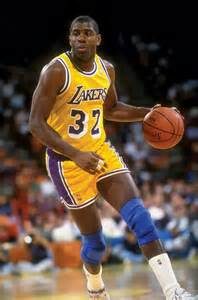
Those of you know me know how passionate I am about the game of basketball.  I love to watch football but the sport I enjoy playing the most has always been basketball.  My favorite basketball player growing up was none other than #32, Earvin “Magic” Johnson of the Los Angeles Lakers.  While most of my school friends were infatuated with a guy by the name of Mike, I stayed true to the Magic Man.  Back then, I would argue back and forth with my playmates that Magic was better than Jordan.  Of course, that was before the tongue-waving, nike-wearing Jordan went on to win more titles than Magic.

I always liked Magic because he constantly exuberated a smile, truly loved the game, worked harder than everyone else, got his teammates involved, made everyone around him better, and was the on and off court leader of the team.  People gravitated to Magic.  It wasn’t just because he had an infectious smile that could light up a room or because he made passing en vogue and contagious with all the assists he dished out.  It was because people genuinely felt he had their interests at heart.  Philippians 2:3–4 speaks to this Christ-like attribute called humility. 

Now granted, Magic had his faults and we are all aware of his licentious lifestyle, but on the court, Magic was a sight to behold.  His dazzling array of passes, change of pace tempo, and unparalleled vision with eyes in the back of his head made Showtime run!  All the Hollywood stars and all of LA lined up nightly to see this new kid on the block — and from his first game in 1979 to the very end of his career — the fans never left disappointed.  The fans were guaranteed a show and the fans always got their money’s worth.

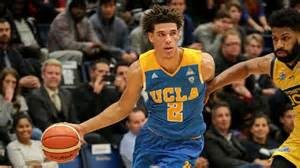
What does Magic Johnson have to do with next generation ministry?  Well, there’s always a rising star in the background who seemingly follows in the footsteps of those who came before them (the next generation).  This past Saturday, I watched a kid by the name of Lorenzo Ball play a college basketball game against Ohio St.  Lorenzo plays for the UCLA Bruins (what are the chances its in LA again) and has been compared to Magic.  UCLA is now undefeated at 12-0 and everyone knew this player and his team were special after they won at Kentucky in the famous Rupp Arena. 

Lorenzo is like Magic in that he makes the game fun for his teammates, is a humble kid, and is an unselfish pass-first point guard.  But what you do not understand about Lorenzo and what you may not understand about Magic is the quality that makes players like these great.  It’s the same quality found in guys like Michael Jordan and Larry Bird.  It is the insatiable desire and will to win at all costs.  Winning drives these men.  Winning can always be taken too far, but for these guys, the refusal to lose is at the core of their being.  What makes us want to watch guys like these bounce a ball up and down a court like a puppet on a string is one simple fact: They are winners!

Don’t miss this!  Don’t just skim over the word winner without giving thought to what it takes to win.  All the sweat, blood, and tears that one exerts to make themselves great while no one else is looking.  All the sacrifices and suffering incurred that end up making the difference between a win and a loss.    

I think Donald Trump, who “wants to make America great again,” was right when he said in his campaign that America doesn’t win anymore.  We’ve forgotten how to win.  What made America great in the past was its wins!  USA didn’t play games.  If American went to war, they won.  As a nation, we were feared.  Of course, back then we knew our strength came from the Lord and not from our military.  Our trust was in God’s might more than man’s strength and we knew He was sovereign in all affairs. 

I recently heard that John Lennon once said, “win the children, win the country.”  I have not been able to find the quote, but I do agree with it!  Next generation ministry is about winning the children of this country to Christ so we can win the world to Christ.  We have to figure out how to win again — in basketball, in this country, and in ministry.  I am convinced we can!


Categories
Next Generation Ministry

NGM: Knowing is only half the battle

My favorite toy to play with as a child was GI Joe.  I also loved the cartoon.  As a boy, I would take a beanbag and figuratively speaking turn the bag into a mountain.  Using all of the bag’s natural crevices, I would station Joe’s on one side of the mountain and Cobra’s on the other.  From that point on, it was all-out warfare between the forces of good and the forces of evil.

Over time, God has blessed me with many good friends who have served in our nation’s military.  I have always had a profound respect for the service men I personally knew (not all are still alive) and would glean as many insights and lessons as I could to implement in my own life.  The Bible speaks of a soldier’s discipline (2 Tim 2:4).  The apostle Paul was well-acquainted with spiritual warfare (2 Cor 4:8-12).

I think the terms “spiritual warfare” and “war” are apt descriptions of the Christian life.  As Christ-followers, we are always on call.  The war never ends this side of earth, though the victory has already been won.  We never get a break.  24-7 for 365 and do it all over again the next year.  For the Christian, life is war.  I have always appreciated John Piper’s call for the Christian to “make war.”  The status quo, games as usual, go with the flow, ho-hum Christianity just isn’t good enough in a time of war.

But there are so many battles to fight.  Where do we start?  And why?  A great general or commander knows whom, when, and how to fight.  A great general also knows where the battlefront is.  The battlefront must be defined because the army who controls the battlefront often wins the war.  We could just as well ask the question, “which hill are we willing to die on?”

Do we die fighting against gay rights, abortion, gambling, porn, immoral media, or a host of other cultural and political travesties?  No, we don’t (Barna would say).  We know Satan is the enemy and we know the gospel is of upmost importance.  But still, where do we begin and what hill are we willing to die on?  I think George Barna was right when he wrote, “the battlefront is found in the minds, hearts and souls of our children.”[1]  Barna continues, “Ever the strategic mastermind, Satan knows well that if you destroy the character and hope of children, you rule the world!”[2]

We must do everything we can to help the next generation obtain a biblical worldview.  If we can train children to love God with all their heart, mind, soul, and strength, Barna says we won’t have to invest time battling over moral and spiritual issues (see above) because the culture will have been shaped from within.  Barna reiterates, “The cumulative effect of their character and beliefs will redefine the contours of our culture” and we will not need to then “worry about how to motivate people to read the Bible, how to encourage people to attend worship services, how to raise enough money to maintain the ministry and how to get believers to pursue the Great Commission.”[3]

If we could produce a world where we won the entire next generation to Christ, I know Barna would be right.  In that kind of world, we would experience spiritual utopia.  But realistically, this isn’t going to happen either (read the Bible).  There is always another battle on the landscape and we are told to put on our spiritual armor (Eph 6:10-20).  All moral and spiritual issues are worth fighting over because they all encapsulate what we would call the biblical worldview.  Suffice to say, however, I think Barna is onto something the church has all too often missed:  Battling over the next generation should take priority.

Yet actions prove where priorities are when church leaders are unaware of the spiritual content children in the church are learning, the only thing that matters is babysitters (oops, I mean leaders) are in place, leader training and recruitment is minimal if not non-existent, and “less than 15 percent of the average church’s ministry budget is allocated to the needs of children’s ministry.”

Next generation ministry is about prioritizing students in both word and deed.  Let’s not just say children are a priority.  We know that they should be.  Let’s show them they are!

[1] Barna, Transforming Children into Spiritual Champions, 50.

[2] Ibid, 51.

[3] Ibid.

Categories
Articles Next Generation Ministry

The Walking Dead: It is real

zombie

There are dead men and women, dead boys and girls walking around us every day. It is hard for us to believe that they are dead because we see them moving, breathing, and making all types of sound. Ephesians 2:1 and Colossians 2:13 teach that those without Christ are dead in their sins. You may recall how Jesus told Nicodemus that he needed to be born again (John 3:3). What does a person who is dead but is alive look like?

The popular television show The Walking Dead, now airing in its 7th season, has garnered more attention than any other cable or broadcast series for 18 to 49-year-olds. The show made its season debut last month with a viewership of 17 million. In a post-apocalyptic world filled with zombies (“walkers”), survivors attempt to do just that-survive.

To me, The Walking Dead paints a vivid picture of what it means for a person to be alive, yet dead at the same time. The survivors who have not yet been eaten or infected represent humans who are alive and who are doing everything in their power to live to see another day. The zombies are those who are already dead, who have passed onto the other side. There is no hope for the zombie, but the survivors hang on to a glimmer of hope.

My fear is that there are Christians today who are living out a half-life, a life based on survival. Jesus did not come and die on this earth so that those who know Him could survive this life. He came so that his followers could thrive in this life (John 10:10). Yes, persecution and death may befall the Christian, but ultimately there is life in death for the believer. There is a joy to behold in this life and the next and his name is Jesus, the One who conquered death itself. The Kingdom of Heaven is to come but it is also present in the hearts of men made alive now.

The Dead Man Walking made a way. Jesus may have looked like a zombie to those who saw him soon after he walked out of the grave. But who could have imagined?

Christians, we are more than survivors. We are thrivors! There is no need to drag. The same power that was at work in bringing Christ out of the grave is the same resurrection power that is at work in our lives! We go out into the world to infuse Life into those who have bitten with the death curse. We have the lifeline, the good news cure to share with those The Bible claims are dead in their sins. We hope they will be born again so that they too can experience life to the full.

Let’s rally together and go wake up the dead Christians who seem to be sleepwalking and remind them of what Life is all about. Let’s tell those who are dead in their sins how they can have Life eternal. You don’t have to wait until the apocalypse to see a world filled with dead people. Just look around you, witness the hopelessness and despair, and get moving!

Categories
Next Generation Ministry

Is there any Hope in ministering to postmoderns?

bible-pic

“In your teaching show integrity, seriousness, and soundness of speech that cannot be condemned” -Titus 2:7b–8a

We live in a postmodern post-Christian context where the world tells us that nothing matters, absolute truth does not exist, and what’s good for you may not be good for me.  In other words, everything is relative and everything is tolerated (except Christianity) in this politically-correct pluralistic utopian-like society.  The word “whatever” sums up this worldview because what’s true for you may not be true for me.  In Bible times, the equivalent of this “whatever” lifestyle can be found in Judges 17:6b, “Everyone did what was right in his own eyes” (ESV).  The HCSB states, “everyone did whatever he wanted.”

How do we minister, and specifically evangelize a generation that increasingly adopts the postmodern mindset? I have taken much time in prayer, in the Word, in seeking God, in research, and in study during my leisure time to attempt to arrive with a plausible answer to this crucial question.  I do not have enough space in this blog entry to write all the answers I have found or have been revealed to me.  Most experts will tell you that sharing your story within sharing The Story (Creation, Fall, Rescue, Restoration) is foundational.  I would agree with this assessment as the biblical worldview seen through the lens of Scripture presents a perfect balance that makes sense out of all of life.

However, I want to share with you my personal thoughts and feelings on the subject of ministering in a postmodern world. We know that images capture the attention of the next generation more than words. Young people often live their lives vicariously through the media.  The next generation often make sense of their world through their music, movies, and games.  How many times have you heard a teenager quote a movie, sing his or her favorite lyrics, or talk non-stop about their favorite video game?  Thanks to technology and social media, the next generation could almost be considered to have multiple personalities in the form of a real-life self and a virtual-self.  In essence, these two people should be the same, but oftentimes they are worlds apart.  This makes ministering to the next generation twice as hard.

But it’s no time to give up!  In working with the next generation, there is a lack of seriousness (see the verse above).  We next generation ministry leaders often contribute and sometimes unintentionally add to the lack of seriousness in the next generation that we minister to.  In this world of random, where kids say things out of the blue that have no bearing on anything whatsoever, we leaders often respond with the same postmodern lingo or say nothing and let our students carry on adlib.  The result is neither party gaining anything of substance.  In postmodern lingo, one word has many meanings. This is one reason in which secular songs are so popular because a song or even a word in a song takes on so many different meanings to different people.

In contrast, the Word is full of substance.  The Word is spirit and life (John 6:63). The Word is truth (John 17:17) and The Word is a means to how one worships (John 4:24).  When we next generation leaders pray the Word, speak the Word, sing the Word, or most importantly live the Word, the next generation takes notice.  The next generation sees Christ (John 13:34–35) and in turn sees hope (Col 1:27).  Hope is what the next generation desires and is what is highly sought after by postmoderns.  We have to tell the emerging generations that there is hope, but more importantly, we must show them who Hope is.

The postmodern movement is not all bad.  There are actually some good elements within postmodernism that have nudged ministry leaders to reform the church today!  However, there are extremes on both sides of the movement and any philosophy or worldview left to itself and without Christ is hopeless and can easily deceive (Col 2:8).

Next generation leader, let’s teach with seriousness, but more importantly, let’s live serious lives.  You can still be cool and hip.  You can still relate and have fun.  But when it comes to the Word of God, let’s make sure the next generation understands God’s Word and life itself is no game.

Categories
Great Commission Next Generation Ministry

Evangelistic Tools & Events to Reach the Next Generation

reid

I previously shared a three-part series http://next-generation-ministry.com/tag/millennials/ describing how ministry leaders and church members alike can reach and keep the next generation. I wanted to identify and define who the next generation is and provide suggestions based on solid research on how the church can reach and keep the next generation.

Statistics and suggestions are all well and good, but ministry leaders and church members should also be equipped with evangelistic tools to accomplish the Great Commission. I like what Alvin Reid, professor of evangelism and student ministry at SEBTS says concerning the state of evangelism in the church, “We don’t have a training problem, we have a trying problem. The door to door evangelistic method is better than using no method at all, which is what most of our people are doing.”

How can we reach and keep the next generation if we never tell the next generation who Jesus is and what he has done for them? The evangelistic tools (programs, techniques, etc.) are limitless. I know this is a truism but the first thing we must do (after prayer) is to pull an evangelistic tool out of our evangelism tool bag. We need to do relational evangelism but we also need to do intentional evangelism and whether we share Jesus in a formal presentation or a casual conversation, we need to be ready at all times to share the gospel.

Sometimes we are ready but not willing. When was the last time you told someone that Jesus loved them? Did they give you a blank stare or ask you who Jesus is? Rather than lament about how sinful our culture has become, let’s begin to share Jesus with others. My best guess is our culture has degraded to where it is today because at some point, God’s people stopped sharing the good news.

In our postmodern and post-Christian culture, we must begin by explaining creation. We live in Athens (Acts 17) and not Jerusalem (Acts 2) anymore. Since our society is biblically illiterate, we must continue our oral storytelling by illustrating the fall, rescue, and restoration of both man and creation as we discuss spiritual matters with people. We must walk with people from Genesis to Revelation and share the story in a way where they understand their life narrative fits within the metanarrative of Scripture.

My favorite tools are

Other evangelistic tools include

Evangelistic events also share a purpose and have a place in the church. See You at the Pole was just celebrated around the globe. Disciple Now Weekends occur in the fall and spring. Summer camps along with VBS have also produced positive results. Youth crusades or revivals and mission trips through the social media world are also effective.