Categories
Next Generation Ministry

You don’t have to advertise “Great”

BuzzFeed News recently reported an article about a little item that has taken the world by storm. Below is how the article starts:

Somehow, the Great Fidget Spinner Frenzy of 2017 managed to burn its way across the country without a major retailer, TV advertisement or brand getting involved. It wasn’t the first time, and it won’t be the last. And here’s the looming problem, for everyone from toy stores to government regulators: products can now reach millions of people before anyone really knows anything about them.

Consider the hoverboard. The hit viral gadget of 2015 rose to international prominence — and fell into relative obscurity — before big toy brands or retailers could stamp their names on it. Or look at vaping, which has become a national pastime without a major brand or retailer getting a piece of it.

Like the hoverboard and other fads that are here today and gone tomorrow, the fidget spinner craze will eventually fizzle out. Pop star popularity is also transient. But whether it’s a great toy or a great entertainer, you instantly recognize greatness for what it is. Then you go and tell all your friends about the greatest movie you ever saw, the greatest song you ever heard, the greatest car you ever drove, or the greatest toy you ever played.

What about the greatest cereal you ever ate? Frosted Flakes, right? They’re Greattttttttttttttt! Ok, maybe I’m taking things overboard, but I think you get the point. Great things sell themselves. You can advertise, market, and tell everyone you meet on the street about your product, but if it is not great, who cares?

Greatness is something that stands out in a crowd. The cream rises to the top. How else do you explain how the A&W root beer float became such a hot item? I can see the cream now. It’s easy to spot talent too. There’s no need to find a job if job offers are flooding in. I don’t know why, but right now I’m thinking of the Lending Tree commercial, “why go crawling to the bank when the bank can come crawling to you?”

Next Generation Ministry (NGM) is Great! Unlike gadgets that become the latest craze for just a short while, I think NGM’s shelf life will be much longer. Ministry models often do phase out over time, but their run is usually longer than two to three years. For instance, modern-day youth ministry is still present in our postmodern times. Who can forget the youth choirs, the packed churches, and the kicking bus ministry of the 1970’s? Though our churches are not as packed, many churches still have a youth choir and run a bus ministry. And we’re talking over 65 years have passed since then. Yes, NGM is here to stay and I think for a long time!

The wave of the future is here! NGM is relatively new to the ministry circuit and in its infancy stages. But as one of its trailblazers, I forecast that the bandwagon will soon follow. Why? Because you don’t have to advertise “Great”.

Categories
Next Generation Ministry

Security Matters

In light of last week’s horrific event, I thought it a good idea to write about the importance of protecting our students in an increasingly dangerous world. If adults, especially congressmen and women of our great nation, need security while playing baseball, how much more so do our children and youth? Protecting our young should always be a first priority in next generation ministry.

Students are used to practicing lock-down drills at schools. Students are all too aware of bomb threats and the protocols that go along with such a threat. In fact, not only is there a password given over a school intercom to notify teachers of a threat, there are different passwords given for different threat levels. And students know all the procedures that follow as they have rightfully been forced to incessantly practice for any given situation. With all of the hassle, it’s a wonder that students ever have time to learn anymore.

But in today’s world, the hassle is necessary. It may take longer for parents and students to enter in and exit out of school, but safety has to come first. The same should be true at churches and for next generation ministry. Security starts with protecting infants, toddlers, and preschoolers. Parents should be required to sign their students in and made aware of the policies concerning drop-off, pick-up, and emergency procedures. Many parents of preschoolers are given beepers, so that if something happens to their child in the middle of the worship service, they can immediately respond.

All next generation leaders (volunteers who work with children and youth) should undergo a background check. This rule applies for leaders who work with the next generation every week (small group leaders, preschool workers, etc.) and for leaders who infrequently work with students (i.e., leaders who just help with summer camps, mission trips, etc.). Most churches have a policy in place requiring new members to have belonged to a church for six months before they are allowed to work with any of the church’s children or youth.

Next generation pastors aren’t CEO’s who are trying to run a student enterprise. No, first and foremost, next generation pastors are shepherds of their sheep. They are willing to take all necessary measures to protect their flock and that includes dying themselves. Thank God for the Capital Area police team that was willing to lay their life on the line. If they had not, twenty to thirty congressmen would have been massacred. There is no greater love for one than to lay down his or her life for his or her friends (John 15:13). Churches represent easy targets for terrorists and other like-minded crazy and deranged people, such as last week’s shooter in Alexandria, VA.

Last week, I did some kingdom-building work by helping a local church (not my own) conduct a mega-sports camp. I was impressed with the high security measures that the church put in place for the event. Some students might have thought the measures to be extreme, but we pastors and leaders understand that times have changed. On the last night (parent night), it was comforting to see a cop car parked in front of the church. Not only do parents feel comfortable about dropping their kids off at a church that takes security seriously, kids feel safe, and that is really what matters. Not to be overlooked, security measures also impact spiritual results. Last week, I saw eleven kids come to know Jesus for the first time in their life!

This weekend, I get the privilege of helping to work a block party event hosted by another church that I am not a member of. Will they have taken steps to guarantee the safety of all in attendance? I do not know, but I do know security matters.

Categories
Legacy

Legacy or Legend?

Buzzwords come and go but the buzzword being heard in the church today is the word legacy. Legacy is an important word in next generation ministry (NGM) because of the command for parents to hand down the faith that they have been entrusted with to their children and to their children’s children (Deut 6:1–9; 2 Tim 1:5, 14). The faith must be passed onto the next generation if the church is going to thrive. Churches and families partner together in the process of passing down the faith to the generations that succeed them. The by-product of parents and leaders successfully handing off the baton of faith is the creation or continuance of a spiritual legacy. It is more important for next generation parents and leaders to possess a spiritual legacy than it is to be a world-renowned legend.


NGM is a very progressive model of ministry and is future-oriented in that its advocates are always standing high and looking out over the horizons to see what lies ahead. However, there is some danger in this trail-blazing approach if balance is not kept in proper perspective. Our natural tendency is to look ahead when we think about passing on our faith to the next generation. After all, our thoughts are on the next generation. However, what we cannot forget is the spiritual legacy from saints past that precede us and has brought us to this point in time: Abraham, Jacob, Noah, Moses, Joshua, David, the prophets, the apostles, and the list goes on.

Because of my conviction to value the faith of my predecessors, I recently made a lifetime investment. I was offered a special deal by Lifeway to buy a total of nineteen books written by spiritual giants of the faith from ages past. Here is the ad that sold me on making the buy:

The voices that shaped your faith in an exclusive collector’s edition to read and pass down for generations to come

Augustine. Bunyan. Chesterton. Edwards. Luther. Murray. Spurgeon. Wesley.  

The Legacy of Faith Library guards the good deposit handed down by champions of the faith whose messages are as applicable today as the time in which they were written. This contemporary collection of the classic texts preserves the author’s words while presenting them in custom bound, leather editions with gilded edges, ribbon markers, and a careful typesetting to guide and enhance your reading experience.

The eight-volume set includes a total of nineteen books and is presented in a handcrafted, mahogany cradle designed to display this one-of-a-kind collector’s edition.

We need the witness of the Church.

We need to hear the voices of those in the past to be faithful in the present. We need to remember stories of heroism under trial—Augustine defending Christianity against its pagan critics and Luther standing before the Roman Catholic magisterium. We need to defend the faith with the wit of Chesterton and the humility of Andrew Murray. We need to embrace Jonathan Edwards’ all-surpassing vision of the beauty of God and John Wesley’s evangelistic urgency. We need to recapture Charles Spurgeon’s ability to proclaim the liberating power of the gospel and John Bunyan’s ability to make these truths accessible even to children.

Church history is important! We have a lot to learn from the Christ-followers who came before us. As I begin reading these books, I plan to include excerpts from the books on this blog. I think it is very important that we highlight the past as we continue to forge new paths in the future. In doing so, our legacy as next generation parents and leaders will only be that much stronger!

Categories
Next Generation Ministry

Episode IV: NGM

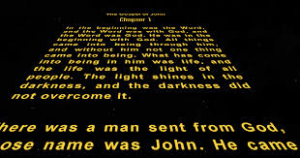
A long time ago in a galaxy far far away . . .  Like the intro to the epoch movie Star Wars, I started my first gig as a youth minister at the turn of the millennium. It was the year 2000. I was young and naïve, but somehow God used me to begin and then build up a youth group (that’s what we called it then). I have learned since that youth groups are social clubs like FFA, 4H, and ball teams. Youth ministries serve their world, their communities, their schools, their church, and each other. Youth groups are about themselves. Think games and pizza. Youth ministries are about loving and serving both God and others. Think missions!

As terminology and the profession of youth ministry evolved, I did as well. For many years, I resisted the notion of attending seminary. I did not see the need for it and God was blessing my ministry. But after much prayer and encouragement from others, I finally gave in. A letter from a Pastor in Macon, GA stuck with me as his written words kept ringing in my ears . . . “a call to the ministry is a call to be equipped for the work of the ministry.” So I called Southeastern Baptist Theological Seminary (SEBTS) in 2005 and asked what they had to offer for training in youth ministry. They told me the closest track they had was called Christian Education and that the plan was to unveil a degree offering for youth ministry in the near future.

Even though SEBTS had no degrees for youth ministry, I decided to enroll and go for my M Div. in Christian Education since I also shared a passion for working with youth in a Christian school setting. After working some in a Christian School and then graduating from SEBTS in 2009, I began working as a minister of children, youth, and education in 2010. I had to wear many hats, but my main emphasis was leading Youth on Mission or building a missional “student ministry” (notice the name change again). Now by this time, SEBTS had lived up to their word and were offering M Div.’s in Student Ministry. I worked full-time until the end of 2013, but near the end of my tenure, I felt God saying “family ministry.”

Being missional was still important, but I knew more than ever, God was transitioning a movement in His Church from “student ministry” to “family ministry.” Ministers like Timothy Paul Jones, Brian Haynes, Jay Strother, Steve Wright, and others were found promoting the family-equipping ministry model.

Around the beginning of 2015, I began my advanced studies at SEBTS in next generation ministry. Next generation ministry was more than “student ministry” and it was more than “family ministry.” NGM was the best of both worlds and more! Students were defined in terms of more than just children or youth and family ministry was essential. Silos were broken, leaders were valued, and disciples were made.

I can attest to the difficulty of working as a youth minister in my early 20’s and working with silos in my early 30’s. After all, it is difficult for a 20-year old to relate to parents and a person of any age to break down silos. Next generation ministry is different than youth or student ministry in that it requires a leader who is experienced in both ministry and life.

I was watching a next generation sport today called soccer (I know its an old sport but its catching on like fire in the USA). An advertisement from today’s big game, the UEFA Champions League Final, stood out to me and may be an ad you remember while watching a football game. The ad was a beer commercial and it said, “it takes 15 years to be a Heineken brew-master.”

That’s the way I feel about being a next generation pastor. To be able to work well with young adults, parents, leaders and students requires someone at least the age of 35 or someone who has about 15 years experience. 20-year olds should still be given the opportunity, like I was, to minister to youth. But youth ministry is not the same as next generation ministry. Youth are part of the next generation, but youth ministry is just one part of the whole in the big picture of next generation ministry. Next generation pastors must be strong in ministry to preschool, college, singles and married young adults as well. I have been a next generation pastor for over two years now and “am still learning” as the commercial went on to say. Youth ministry . . . student ministry . . . family ministry . . . next generation ministry . . . what lies beyond the final frontier? Only God knows . . .

Categories
Next Generation Ministry

Congratulations Graduates!

Numbers 15:37-39 – “The Lord said to Moses, “Speak to the Israelites and say to them: ‘Throughout the generations to come you are to make tassels on the corners of your garments with a blue cord on each tassel. You will have these tassels to look at and so remember all the commands of the Lord, so that you may obey them and not prostitute yourselves by going after the lusts of your own hearts and eyes.

Graduation Day—a day mixed with emotions. All involved—parents, teachers, administrators, students—carry with them a bittersweet feeling on Graduation Day. It is both a happy and a sad moment. The sun is shining, but the rain is falling. If you are really struggling, open up to the Book of Psalms and begin reading. In many instances, Graduation Day, a milestone event, is merely a symbol that little Billy or Sally has grown up. Graduates not only leave their old school behind never to return, but often leave home (“empty nest”), only coming back on occasion.

Graduation Day is a special time for me this year! My niece graduates from high school tomorrow and then sets sail for UGA, the University of Georgia. I am happy for my niece’s accomplishments and achievements but sad to have seen her grow up so quickly. When she flips the tassel and throws the hat up, it’s time for a new part of her journey to begin.

Reading the biblical passage above struck me in a strong way this past week. The tassel did not represent graduation for the Israelites and the tassel was not attached to a graduation cap. However, I hope upcoming graduates understand that when they they finally flip their tassel, they will look it and recount God’s faithfulness to them and remember his commands. College life will test one’s commitment to Christ in many ways. Graduates who recognize that God was with them through high school will understand that God will be with them through college. Unlike men, God does not change. The big theological word that we use to explain God’s unchanging nature is immuatability. I am glad that God does not change but I am even more glad that God does not leave or forsake us (Heb 13:5). Life is ever changing. Generations come and generations go, but God’s faithfulness remains.

In NGM, we celebrate milestone events! Graduation is just one such milestone in a young person’s life. Next generation leader, have you ever thought about what you want your church graduate to look like when he or she graduates from your ministry? If not, you should have. What is the end goal? The end goal should be to develop a fully committed follower of Christ. If you’ve done your job right, you have worked with parents, children, students, and leaders for eighteen years (if you’ve been serving that long) just for this moment! And though the discipleship process never ends, it becomes clear to all that you have left your mark! Though society no longer looks at pastors with the same gusto, your position is of supreme importance and you should share in feeling a sense of accomplishment as your graduate walks across the stage, be it at school or at church.

Yes, graduation is happy and its sad. But what do you do when it is all over? Just remember what comes up after the rain and after the sun. Rai͡nbows signify God’s faithfulness to his promises. When it is all said and done, walk away in joy knowing that God and his Word are not going anywhere. And maybe, just maybe, your graduate will find a pot of gold at the end of his or her rainbow.

Categories
Great Commission

NGM in 3D

Today’s post is special because I am writing it in 3D! No, you do not have to put 3D glasses on to be able to read it, but you do need to visualize the subject of next generation ministry (NGM) from the vantage point of three different dimensions: globalization (the third world), technology (the third wave), and motivation (the third drive). Our world is vastly changing so try to keep up! I will first explain each dimension in 3.0 form. Then I will conclude by taking all three dimensions and integrating them into the subject at hand: next generation ministry.

Thomas Friedman who wrote The World is Flat: 3.0 writes, “Globalization 3.0 (which started around 2000) is shrinking the world from a size small to a size tiny and flattening the playing field at the same time” and that the dynamic force behind the globalization movement is “individuals and small groups” who have been empowered. Friedman says that Globalization 3.0 is going to be driven by “a much more diverse — non-Western, nonwhite – group of individuals.”

Steve Case, inventor of AOL, describes The Third Wave (what I call Technology 3.0) as being “where entrepreneurs will use technology to revolutionize major real world sectors – including healthcare, education, transportation, energy, and food – and in the process transform the way we live.” The internet will no longer be an “Internet of Things” such as apps, social media sites, search engines, etc., but will become an “Internet of Everything” that will disrupt every industry as “it is integrated into every part of our lives – how we learn, how we heal, how we manage our finances, how we get around, how we work, how we eat . . . everything from energy to insurance, from agriculture to manufacturing, is transforming.” We will do more than interact with the internet. The internet will interact with us.

The third wave isn’t coming. The third wave is here! For example, the Helo LX Wristband is a new disruptive technology that is the world’s most advanced lifestyle wearable. The Wor(l)d Helo blows away the competition such as Fitbit Blaze or Surge, Samsung Gear S2, Microsoft Band, Garmin Forerunner, and the Apple Watch as the Helo does so much more than just measure heart rate, step counter, calories, distance covered, and sleep quality. The Helo is iPhone/Android compatible and can also perform an ECG/EKG, monitor blood pressure and other vitals, and sensor for mood and fatigue. The Helo comes with germanium plates, Himalayan salt plates, a panic button, and an emergency SOS GPS location device. That’s not all. In the future, the Helo will have other health and fitness features such as the ability to take one’s blood oxygen, body temperature, blood sugar, and blood alcohol levels while also serving as a mosquito shield. In the third wave, you will no longer need to go to the doctor to get a checkup as the doctor will now be able to check up on you 24/7 wherever you are.

Daniel Pink explains the third drive or Motivation 3.0 in his book Drive as the upgrade we all need “in order to meet the new realities of how we organize, think about, and do what we do.” Pink describes the third drive “as a way of thinking and an approach to life built around intrinsic, rather than extrinsic, motivators” and “powered by our innate need to direct our own lives, to learn and create new things, and to do better by ourselves and our world.” Pink uses the words autonomy, mastery, and purpose to describe the desired behavior that “concerns itself less with the external rewards an activity brings and more with the inherent satisfaction of the activity itself.” Pink says this type of behavior “leads to stronger performance, greater health, and higher overall well-being.”

So what do Globalization 3.0, Technology 3.0, and Motivation 3.0 have to do with next generation ministry? Everything! Next generation leaders must capitalize on the third world, the third wave, and the third drive by understanding the times and then venturing into the unknown realm themselves. More importantly though, next generation leaders must weave these three dimensions into accomplishing the Great Commission (Mat 28:19-20). Next generation leaders must be internally driven to reach an ever-flattening world and to make disciples using the latest technology. As international partnerships are made and “cities that were once marginalized become entrepreneurial powerhouses,” next generation leaders find themselves in a unique position to be the catalysts of some of the greatest mission mobilization the world has ever seen!

Take your talent to a desperate world (anywhere on the globe), do what God made you to do that you love doing (intrinsic motivation), and use any means you can (including technology) to help you make disciples of all nations (NGM)!

Categories
Great Commission

It’s time to work out!

Share Jesus Without Freaking Out series post 8/8

Principle 8: Developing a lifestyle of sharing Jesus consistently flows out of a plan to share Jesus regularly.

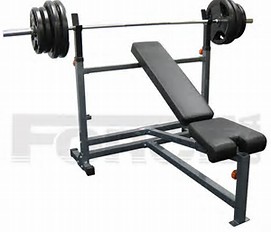
I teach a weightlifting class to high school students at my school. Every week I receive a workout log detailing muscles worked, exercise type, weight, and the number of repetitions. Upper body workouts include working out the chest, back, shoulder, and arm muscles while lower body workouts include working out the quadriceps, hamstrings, calves, and abs. Whenever one is working out, it important to have a plan. When I walk in the school’s weight room, I know my routine.

My personal fitness plan involves maintaining tone, balance, and agility. I am less interested in obtaining mass. I am not trying to set a world record bench press for my weight class. I don’t run long-distances every day, but I do run frequently. I hardly ever sprint unless I am playing sports and in the summer, you can find me punching or kicking a bag, jumping rope, and or lifting a medicine ball.

My personal fitness plan is different than many other people’s fitness plans because it is a plan that fits me. A student recently asked me why I took the elevator at school. I told him because I run three miles after school. Some people would not even go outside on a hot day to run, while others would say three miles is not enough. If I were training for a half-marathon, I would have to increase my foot mileage.

Having a personal fitness plan relates to having a spiritual witness plan! Unlike my personal fitness plan, do I desire to be at the same place ten years from now in my spiritual witness? Of course not! I want to grow in my ability to witness every day and I still have a long way to go. I have some goals in my witness plan and over time, I hope to achieve my goals. As Dr. Reid has written about, take time to evaluate your gospel conversations so you can see how to tweak them for your next witnessing encounter. You have never arrived and must always live with a holy discontent if you are to be the best evangelist you can be.

Lately, I have been learning the value of principle-based living. The Bible is full of principles! For example, the biblical principle of Seed – Water – Growth is a great principle for an evangelist (1 Cor 3:6). You are not always going to win a new convert when you tell others about Jesus, but you may have just planted a gospel seed in someone’s heart or watered on someone else’s implanted gospel seed.

Dr. Reid gives five principles for a life plan of witness: (1) Focus your life on the gospel of Jesus Christ, (2) Understand the factors that help your personal witness: giftedness, calling, and deep satisfaction, (3) From the concentric circles exercise on p. 96, identify in your circles of influence people you already know who don’t know Christ, (4) Regularly stop to assess your plan with an accountability partner or mentor, and (5) Pray daily for your witness and for those to whom you will witness.

At my school, we allow students to have time during the day to get up and move around on the upstairs walking track that surrounds the school’s gym. Walking and or running can help ease the mind and bring about greater levels of concentration and focus. In an academic setting, exercise is vital. Rest is important too! You probably remember nap time in kindergarten but do you ever give yourself nap time at work or at home? A fifteen-minute power nap does wonders for the soul!

Always return to your why. Why should you have a physical fitness plan and a spiritual witness plan? Because your overall health and well-being is directly linked to how long and how well you will be able share Jesus with others! You can take that principle to the bank!

Categories
Great Commission

Let’s Take a Ride!

Team Novo Nordisk 2017 Stone Mountain Training Camp

Share Jesus Without Freaking Out series post 7/8

Principle 7: Talk to the actual person in front of you about the Jesus inside you; let them see and hear the change Jesus makes in you.

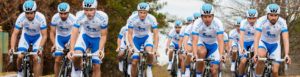
I literally live and work in the middle of nowhere. In fact, the school I work at is located on Nowhere Rd. That’s why I couldn’t believe my eyes yesterday when I saw a team of cyclists travelling as a pack down Nowhere Rd. As I look back over the course of my life, I have no recollections of ever spotting a team of cyclists. I knew the cyclists were a team not only by their team uniforms and formation but also because their team car was following close behind. On top of the team car, I noticed an empty bike holder and on the side of the team car, I found the team’s name: Team Novo Nordisk Pro Cycling.

I never said a word to Team Novo. They went their way and I went mine. But they spoke to me, not verbally, but in action. See, Team Novo cycles for a cause. I looked up Team Novo and here is what I found:  Team Novo Nordisk is an American global all-diabetes sports team of cyclists, triathletes and runners, spearheaded by the world’s first all-diabetes professional cycling team. The team’s mission is to inspire, educate and empower people affected by diabetes.

Not only was it good that Team Novo did not speak to me, it was great! Oftentimes, actions speak louder than words. Had I tried to stop the cycling team so that I could talk to them, I would have only interrupted their trek and slowed down my own. I also had a destination I needed to arrive at and both the team and I were on a journey. Thankfully, my journey involved four wheels!

As I have plowed through this blog series on Sharing Jesus Without Freaking Out, I have tried to include personal stories. I did not want to copy the content of Dr. Reid’s book, only to reinforce its application. I hope you will buy a copy of the book so you can journey through it for yourself! Evangelism is the need of the hour in the American church as many American churches find themselves on life support. Not only will evangelism pump new blood and life into your veins, it can revitalize a church itself as individual members catch fire and the church-at-large begins to burn. Light the fire in my soul, Fan the flame and make me whole, Lord, you know just where I’ve been, So light the fire in my heart again.

I hope my blog post series has helped to light a fire in you as it pertains to you sharing Jesus with others in the world today. Though I have talked to you about the important role that conversation plays in evangelism, there are times when saying nothing is the best road to travel down. Silence would seem antithetical to the thesis of Dr. Reid’s book, but Dr. Reid expounds on his logic when he states, “The greater the intimacy of a relationship, the more valuable your demonstration of a changed life, and the less intimacy, the more necessary is your verbal witness.”

I can still remember the great evangelist Billy Graham saying something to the effect of “give me five minutes with you in your home, and I’ll tell you whether you’re a Christian or not.” Your family knows who you are. They live with you. You don’t have to say much or say anything at all. They’ve heard and seen you enough to know who you really are. How do you treat your family? That in and of itself is a greater witness than preaching the gospel to them for the nine hundredth time.

Recently, I found myself saying something profound (it doesn’t happen much so listen up). I told my friend that I didn’t trust tv preachers that much because I found them preaching the gospel, but not living it. See the difference? Anyone can preach the gospel. Jesus knew this full-well and warned us of false teachers or wolves in sheep’s clothing (Matt 5:17).

Let’s take a ride together and let Jesus take the handles. It is necessary to share the gospel in word. Just understand there are times when you need to ride and say nothing.

Categories
Great Commission

It’s Harvest Time!

Share Jesus Without Freaking Out series post 6/8

Principle 6: Expect people to be open to the gospel, and learn to share Jesus where they live.

Two years ago, I started next generation ministry work at The Heights Church in Commerce, GA. When I began working at the church, I was told by a church elder that the harvest was ripe. What does the expression “the harvest is ripe” mean? Speaking evangelistically, the expression means that souls would be saved if the gospel call were to go out. The elder firmly believed that people’s hearts in the area would be responsive to a move of the Spirit.

In other words, our church elder was living out principle six because he had great expectations that people in the northeast Georgia region would be open to hearing the gospel. Sharing Jesus with others in conversation on a daily basis is great and is why Dr. Reid wrote his book. However, evangelistic events still have a place in church life. Remember, it’s not either-or, but both-and when it comes to church members having everyday gospel-centered conversations and churches hosting evangelistic events.

About the same time I started working at my church, I attended a local wrestling event in the area that took place in a high school gym. It was at this event that I met wrestler and evangelist Nikita Koloff. Through a series of events, I was able to line Nikita up for an evangelistic event that will take place at my church this Sunday. Much prayer and supplication has been poured out for lost people in the community and for the highly anticipated event itself. Much planning and preparation has went into hosting this evangelistic event at the church.

When the seeds have been sown and the right conditions exist, harvest time is just around the corner. When corn is produced on a stalk, the farmer grabs a basket and fills it up. Likewise, when people come to the Lord for the first time, discipleship begins. After a harvest of souls has been reaped, it is the responsibility of the local church to come surround the new believers and disciple them. I am thankful that my church and next generation ministry itself allows for a simple discipleship process.

At The Heights, our mission is Loving God – Loving Others – Serving Both and our discipleship process is aligned through disciples actively participating in corporate worship, life groups, and ministry teams.

Thom Rainer, President of Lifeway Christian Resources, recently stated that in the future, evangelism would be done by churches “more out of necessity than by commission” or desire. Rainer estimates that 10,000 churches are dying every year. American churches will once again focus on evangelism or die at their own peril.

Both the individual church member and the corporate church at large have a responsibility to reach their community for Christ. Though my church is bringing in an evangelist, we as members are all called to do the “work of an evangelist” (2 Tim 4:5). Gospel presentations still work too. Try this at your next evangelistic event: Before and after the gospel is presented by the evangelist or your pastor, have church members share Jesus with others in conversation with all who attend (you will need to train members first). Talk about a powerful witness! The community you are trying to reach will leave believing that you and the church care about them, believe in what you’re talking about, and have been “endued with power from on high” (Luke 24:49). And even more important, hopefully they leave with a newfound relationship with Jesus as their personal Lord and Savior!

The harvest was ripe in Jesus’s day (John 4:35, Luke 9:37). With over 7 billion people on planet earth today, how much more ripe is the harvest in our day? In Revelation 14:15-16, the harvest of the earth is ripe and is reaped with a sickle. There is some irony surrounding our evangelist Nikita Koloff, “The Russian Nightmare” as he often wrestled wearing an outfit with a sickle on it because the sickle represented a soviet symbol. Today, the sickle means something totally different to Nikita as he himself is God’s sickle used to reap a harvest of souls. I am claiming Matthew 13:8 as our event verse and expecting a hundred fold crop!

Categories
Great Commission

What’s in your pocket?


Sharing Jesus Without Freaking Out series post 5/8

Principle 5: Effective evangelistic conversations connect the unchanging gospel with the specific issues people face.

Check to see what’s in your left pocket. What are you carrying around? Keys, a phone, tissue, a wipe? I was recently asked this question and just happened to have chap-stick. Now, how can you use what you pulled out of your pocket with your left hand to build a bridge to the gospel (let’s call that your right hand). My reply was God created your lips (Creation), but they at times become chappy (Fall), and that chap-stick applied (Rescue) will restore your lips (Restoration) . . . likewise when you apply Christ to your life, you are rescued from your fallen sinful nature and restored to glorify God in word and in deed.

Jesus used everyday objects to teach spiritual truths. Let’s do the same and use everyday objects to teach everyday people the gospel story everywhere we go. I have a long ways to go. We are all at different stages in our sharing Jesus with others journey. I am comfortable with passing out outreach cards but not as comfortable asking my waiter/waitress if I can pray for him or her. God can grow me to the point where asking a simple question to a waiter/waitress will become common place. Here’s another example of my witnessing growth:

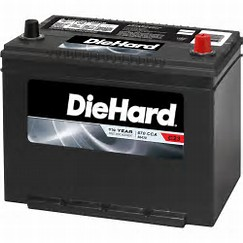
Last week, I needed to get my car battery replaced so I made my way down to the local auto parts store. Mario was the name of the store employee I came into contact with. Through conversation, I found out where Mario was from and that he liked working outside. In replacing my car battery, Mario got some reprieve from being inside all day because he was able to venture out into God’s creation. With the sun shining and trees in the background, I talked to Mario about creation as God’s country. Mario was meticulous in his work and I thanked him for rescuing my car and restoring its battery. Before leaving, I made sure to mention to Mario that like my car battery, Jesus restores us all from the fall of sin by coming to our rescue and restoring us.

You may think this conversation came easy to me, but inside I was freaking out. I felt God calling me to speak up for his name but I wasn’t sure how. I remembered the verse that if I was ashamed to speak of him to others, he would be ashamed of me in his glory (Luke 9:26) and felt some positive pressure. Then things didn’t go as planned. I was able to get creation in, but the conversation came to a standstill and I felt the Holy Spirit say wait. In the end and with the help of a friend, I was able to present the gospel in conversation! Could I have done more? Sure. I could have asked Mario if he understood the gospel and if he wanted to accept Jesus as Lord, but perhaps I would have freaked out even more. We have to grow into sharing our faith, practice sharing, and become comfortable in and with the evangelistic process.

I am convinced that in today’s social-media driven world, we will need to become effective conversationalists for the sake of the gospel. This is true for the virtual world but even more so for the real world, where people are craving for real community. Dr. Reid provides five practical ways to engage people in conversation: (1) Share your life story! (2) Ask good questions like “what is your faith background?” or “What does a real Christian look like?” (3) Affirm and encourage unbelievers because they are still made in God’s image, (4) Speak to the person’s mind and heart, and (5) Connect to people beneath the surface by finding out their passions and pains and then allow them to open up to you.

It’s a challenge to start a conversation using an everyday object and then transition it to the gospel story, but it’s a challenge you can overcome with the help of the Holy Spirit!