I offered a discipleship challenge to my church this past weekend. The challenge was to start Discipleship groups (D-groups) that operate out of and from within Sunday school classes. To understand how D-groups work, just watch the above message, beginning at the 36 minute mark. The response to my message was good! I believe we will soon have D-groups up and running at the student and adult level.
I have developed curriculum for Student D-groups in the M.A.P.’s Journal.The journal contains one scripture per week that students will need to memorize for their D-group meetings. D-Group Leaders for Student D-Groups will need to purchase Next Generation and Discipleship to obtain the teaching passage used in the M.A.P.’s Journal (what I call the MAP). Adults may use the M.A.P.’s Journal for D-groups as well. My recommendation is that adults read the entire chapter (that their weekly memory verse is located in) before their D-group meeting. Students simply need to read the passage that the memory verse is located in.
For example, the memory verse for Week 1 of the M.A.P.’s Journal is Luke 14:27. Students would need to read Luke 14:25-33 while adults would need to read all of Luke 14. The D-group leader needs to go one step farther than his or her students by reading the online IVP New Testament commentary offered for free at www.biblegateway.com for the week’s selected passage (students) or chapter (adults). This way, the D-group leader will be able to facilitate discussion amongst students. The end goal for D-groups is increased Christ-likeness for all group members!
Having talked about my first two books above, I leave you with a promo for my third: While driving around, I came across two church signs recently. One church sign read “youth group, fun and games, Wed. 7 pm.” The other church sign read “student ministry, Wed. 7 pm.” In my latest book The Student Ministry Time Machine, I talk about where student ministry has been (the first sign), where student ministry is (the second sign), and where student ministry is going (read my book!). For the purpose of this post, I will simply say next generation ministry and discipleship go hand in hand!
Culture matters! So does Faith! We need to keep up with culture if we want to reach the next generation for Christ. It is ok to have a Bible in one hand and a smart phone in the other. Like the men of Issachar, we need to understand the times in which we live so we can know what to do (1 Chronicles 12:32). If you have read Acts 17, you know the Apostle Paul was great at analyzing culture. He understood his culture and audience so that he could present the gospel in the clearest manner. He used his audience’s culture as a point of contact to begin gospel conversation. I hope this video will encourage and inspire you to share the gospel and to fulfill the cultural mandate!
In my last post, I identified some beginning markers for my journey into next generation ministry. Today, I would like to build upon some of these markers to further delineate differences found in next generation ministry and traditional children and youth ministry.
As a new next generation pastor, I have found myself spending the bulk of my time in the preschool. Why? Because the foundational building block must be set up for excellence. If the beginning block is unstable, the ensuing blocks you build upon are likely to tumble. Just ask any preschooler who likes to build towers! As I’ve spent a lot of time getting this beginning block in order (kids check-in, etc.), I have found myself spending more time with teenagers. I say all of this to say that as a next generation pastor, you may find yourself spending more time with a specific age-group (preschool, children, youth, college) in certain seasons than others. Things tend to balance out in the end!
As a next gen pastor, I have also been able to spend a lot of time in the community building relationships. I help coach a youth basketball team and this has allowed me to cultivate relationships with students and parents I would have never met if I stayed locked up in my office.
I have also allowed my teams and leaders to lead. I have a team for children, students, and college-aged students with a leader for each team. I consider everyone on each team a leader, but I consider the team’s leader as the leader. This bottom-up leadership has been so valuable that it has allowed me to do things for my church that otherwise would not be possible. For instance, I am soon to give my church a presentation on the topics of faith and culture (I will try to add video of my presentation in my next post). I will also be preaching soon on the topic of discipleship and value of having D-groups for all ages. Other items to come in the future could include hosting Sunday school teacher training, beginning a new members/new believers class, and the start-up of special needs ministry. None of these items were on my job description, so you may ask how in the world would it be possible for me to do even one of these other listed items. The truth is everything boils down to leadership. I have great leaders under me that allow me to lead at a higher level which makes the church healthier and stronger. Get this: I have been on the job for over two months and have not taught one lesson to any age-group. Now, that is true next generation ministry! I have leaders that excel at leading and teaching their specific age-groups that I am able to wear more hats and do more than has been asked of me.
In team meetings, I attend and serve almost as a mom/dad voice in the room giving approval or disapproval. Like every ministry to the next generation, we have opportunities and challenges to discuss. A challenge we are currently discussing include adding an extra hour to our Sunday night youth programming. A challenge I am sure you have dealt with in your own ministry is when to begin student ministry (6th or 7th grade). I provide these as examples just to say that next gen ministry is not without its challenges.
So, what is it I hope to accomplish in next gen ministry that could not be accomplished by a children’s or youth pastor who was working unto him or herself. Besides, the teams I mentioned above, I also have a next generation team that consists of the leaders of each team mentioned above. I will meet with these leaders and we will talk about implementing milestones for our next gen ministry. As a team, we will decide on which milestones to include and which to not. Then I will be able to create a next gen booklet specific for my church that any member can access at anytime.
Hopefully, this journal of my next generation ministry journey is helping you along in your own!
On November 1, 2018 I began full-time ministry in next generation ministry! I must say I am loving it! For those of you have followed my blog, you know I have been writing about next generation ministry for over two years. You know I graduated with a doctoral degree in next generation ministry and you know I have a written a few small digital and print books on the subject.
Most “next generation pastors” are in name only. It’s not that they or their ministry to the next generation is unimportant. To the contrary, I believe their work and ministry should take some of the highest priority in church. What I mean “in name only” is that most pastors with the title “Next Generation Pastor” are simply glorified youth pastors. They are most often pastors doing the same old model of children and youth ministry, only this time wearing a different or cooler name tag.
Now, if you are doing any ministering in any capacity to and for the next generation, I can see how you would call that next generation ministry. However, that is not how I define next generation ministry. In fact, I find there are few and far between who are doing true next gen ministry. I write this not to degrade anyone involved in ministry to the next generation. If you still find yourself confused at this point, I would point you toward my first book, Next Generation Ministry and Discipleship, where I spell out what I consider true next generation ministry to be. A good follow-up is my second book, The Student Ministry Time Machine, where I move from mere next gen ministry theory to practice thereof.
Believe it or not, the intent of this post is not for me to sell more of my books. Being on the frontier of true next generation ministry, my intent is to journal my findings for you so far of full-time next generation ministry in a small church environment.
First, don’t expect to pull off next generation ministry in any sized-church unless you have a slew of leaders ready to roll up their sleeves and get to work. I am most blessed to have preschool, children, youth, and college leaders leading a team of leaders to plan, coordinate, and evaluate all ministry-related activities.
As a Next Generation Pastor, I am not expected to be at every next gen ministry event nor would it be possible for me to do so. To lead leaders who lead leaders, you must first serve! This is what Jesus did. My first order of business has not been to come in and change anything. My church’s preschool, children, youth, and college teams were already leading effective ministries. Your situation may be different and I understand. Context will differ for each us. I found it my job to add to or enhance my church’s current ministries to the next generation. My church’s ministries to the next generation have now been unified in the form of next generation ministry (“cradle to college”). Before suggesting and discussing a program or event here or there to my leaders that I think might enhance our current level of ministry activity, I thought it best to first honor all of our next gen workers and volunteers by giving them a Christmas present for all they have done this past year. Appreciation is important but so is Celebration! Thus, the next item on my agenda is to celebrate all of my next gen teams and leaders by taking them out to eat. Appreciation and Celebration are small tokens when you consider how much time the rest of the year leaders, volunteers, and workers give of themselves to the ministry.
I will keep you updated on my journey! In the meantime, how are you treating those in your church who value and invest in the next generation?
The world is “a changing.” Perhaps you remember the companies
Kodak and Blockbuster. When I was a teenager, these companies dominated the camera/video
industry. I would drive to Blockbuster, rent some videos or games for a weekend
and then return them in time to avoid a fine. That is, until Netflix made
Blockbuster obsolete. Who needed to go rent movies when the movies would come
to you? And who needs Kodak when we can take out our phones and print our own
pictures? Somehow, Kodak missed the digital era. What happened? These companies
did not change with the times. They did not reinvent themselves.
In contrast, Disney World and Amazon have skyrocketed in
sales since I was a teenager. What’s the difference? Why does Disney World have
more people attending their theme park than ever before and why does Amazon
continue to increase its sales? The reason: they continually tweak what they do
best. And, they add the latest and greatest rides, attractions, or items to
their agenda. It’s like coaching. Nick Saban, John Calipari, and Mike Krzyzewski
are the best college coaches because they continually re-invent themselves and
play to their strengths. Other coaches find themselves out of a job and looking
from the outside-in.
Did you know that the next generation is changing the cheese
industry? Kraft Foods is beginning to sweat. Our country’s cheese market is
down 1.6 percent. Millennials are demanding “nourishment from ingredients that
are both recognizable and pronounceable” (from a Bloomberg report). What’s the
result? Todd Rhodes says, “McDonald’s, Wendy’s, and other fast-food restaurants
are moving away from processed American cheese to offer things like Asiago and
Real Cheddar.” If Kraft doesn’t readjust, they will be the next Kodak.
The church is no different. We live in difficult times.
However, we the church still hold the message that can transform lives, heal
families, and revive churches. It’s not our message that needs to change. It’s
our methods. Reaching people today for Christ is not the same today as it was
twenty-five years ago. We’ve gone from a country where everyone believed in God
to a country where many doubt his existence. I won’t use this post to list all
the areas the church needs to change. This post is written so the church will
recognize it needs to change. I heard a great quote yesterday: “If you want to
solve a problem, you must first admit you have a problem.” Church, we have a
problem. We also have the solution!
Where do you need to change? That’s right—you? Change is hard. I know. As God disciplines us, it is often painful. But, I’m not talking about the change Christ brings about in us character over time. I’m saying where do you need to change so you can live like its 2018. I think part of the church’s problem is many churches are still doing church like it’s the 1950’s. “Doing church” is an even bigger problem, but I won’t go there.
For me, I resisted offering my next gen books in digital format. But, I realize the world is changing and I don’t want to get left behind. I want to like Coach K and Coach Saban be able to relate to the next generation even as I age. I don’t want to become like Kodak, a thing of the past. You can find my digital books in Kindle format on Amazon. My print books are cleaner in format and I would recommend you buy them. But, if reading books on your tablet, phone, or e-reader suits your fancy, be my guest! In fact, I updated Next Generation Ministry and Discipleship just a tad in the Kindle edition. The Kindle covers will appear different than the print covers. If you are interested in purchasing my books from the Kindle store, here are the links:
Ask any student you know this question: “Who is your
favorite preacher?” You are likely to get a few blank stares, “favorite what?,”
or looks as if to say why are you asking me this question. Next, ask the same
student this question: “Who is your favorite rapper?” You are likely to get ten
different names, any one being from the top ten list of rappers that every
student knows.
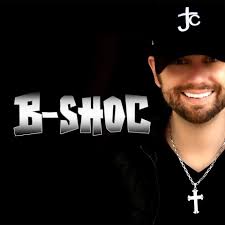
Last night, I took some students out to hear a Christian rapper that goes by the name of B-Shoc. This wasn’t the first time I’ve taken students out to hear a Christian rapper. Ever heard of Lecrae? Believe it or not, there are many Christian rappers currently out riding the circuit.
To be honest, B-Shoc’s music wasn’t my favorite. I much
prefer Lecrae’s. But, nonetheless, I found myself down at the front of the
stage jumping up and down with my sideways two-peace signs. WHY? It wasn’t
about my musical preferences. It was about my students’ preference. If rapping
a Christian song helps students come closer to God, I’m all for it.
What I preferred to hear over B-Shoc’s music was B-Shoc’s
Jesus story. He said he went to Wal Mart when he was a teenager (after falling
in love with “the beat”) to find some Christian rap music and there was none.
At the time, he settled for what the world had to offer and soon afterwards
found himself climbing the secular charts and playing in popular nightclubs.
That is, until the Jesus he knew as a child got his attention. B-Shoc hit a
rock bottom in his own life and said God told him to combine his passion, rap music,
with the lifestyle of following Jesus. B-Shoc said he knew he was to take his style
of music into the world to reach lost souls and even into the church to
encourage the saints.
But it hasn’t been easy. B-Shoc has encountered a lot of opposition. Yet, B-Shoc has seen nearly 10,000 souls won to the Lord in his nine years of ministry. I think its easy to criticize. We could probably all find something to gripe about. But the question I would like to ask B-Shoc haters is this: “How many souls have you won in the last nine years?”
Reaching the next generation for Christ isn’t easy. But as
you can see, B-Shoc has continued to grind. He says he is driven by that empty
CD shelf at Wal Mart with no Christian witness to the style of music that
captured his soul. I’m sure B-Shoc doesn’t want the next generation to follow the
footsteps he took as a young man and is also driven to do everything he can to
offer the next generation an alternate choice.
B-Shoc says it’s not get your life right so you can get
right with Jesus; it’s get right with Jesus so you can get your life right.
Sounds like good preaching to me! Christianity never was about climbing a
ladder or stairway of good deeds all the way up to heaven. It’s the exact
opposite. Jesus walked down the stairway so he could carry you back up with
him. B-Shoc then told the students getting to know Jesus takes a lifetime, but salvation
can happen in a moment.
This was all great stuff! But none of it was my favorite.
Because B-Shoc was about to bring it home. He got personal with all in
attendance, including the adults. He shared with everyone that they were
uniquely made by God and that they could search the earth and not find another person
just like them. God had created them for a purpose. Maybe they weren’t supposed
to be a Christian rapper like him, but it was their job to find out what God
had created them for and then do it.
In words only a Christian rapper could get away with, B-Shoc told everyone in attendance to hear what God was telling them, get off their butt, and MOVE to start doing it. Say what you will, but I think it’s a message the church needs to hear. If all you do is sit and worry about what God has told you to do, you’re not only hurting yourself, you’re hurting God and you’re hurting others whom God made you to help. *By the way, the reason I’ve written this post and others is because, like B-Shoc, God told me to!
I like preachers and I have known many good ones! But maybe,
just maybe, the next gen knows the names of rappers and not the names of
preachers because the rappers are telling it like it is. If we’re going to win
the next generation, we’ve got to win their hearts and we’ve got to be real.
Center yourself on the gospel, focus on the mission, and GO create a culture of
missional artists in your next generation ministry that are ready to use their
gifts and passions for the glory of God!
Kids
used to pass a note to classmates in school wanting to know if their classmates
liked them or not. At some point in your life, you have probably read, written,
or at least heard about the note a student gives that says, “Do you love me,
check yes or no?” If you’re a student today, you’re more likely to get a text
message from another student saying “What’s the news?” Both the note and the text
carry the same meaning as they both serve as a check-up on the status of the
relationship. DTR or “define the relationship” is also a popular term that
describes the same notion.
Back in
the day, a boy would call a girl to ask her out. Today, students can check up
on each other through social media outlets, pictures, and posts. There is a lot
of teen slang found in texts and posts today. To begin decoding the new
language, you can start by googling “teen slang and text.” Netsanity.net has
produced a decoding guide and says some acronyms are fun and harmless, some you
just need to keep an eye on, and some are warning flags.
A
popular game as of late is the game app Fortnite. Students have fallen in love
with this game because it offers them two things: (1) Competence and (2)
Connection. Students want to achieve the highest levels and most points in
games because games make them feel good about themselves. Students like
challenges and overcoming challenges. Achievement is important to the next
generation. Perhaps you are not challenging your student enough. Provide them a
vision big enough to latch onto.
I recently heard of a dad who
couldn’t understand why his good Christian daughter enjoyed dating a pothead.
Problem is the dad had not painted a brighter and bigger picture for his
daughter to admire than her boyfriend could offer. The dad then decided that his
family was going to get involved with building an orphanage in Africa. Guess
what? The family did and the daughter dumped her boyfriend. Besides the
challenge, I’m sure the event made the daughter feel more competent as well. Dad
had raised the bar and his daughter passed the test with flying colors!
But
games also provide students with talking points. Since “everyone is playing,”
students can easily initiate or jump into conversations with friends. Students
are really just looking for acceptance. They have achieved their game goals and
they talk about their story of doing so along the way. This way, students stay
plugged into the game while staying plugged up with their friends.
I met a
veteran youth minister today by the name of Drew Hill. Drew shared a story that
will stick with me. He said he went to his daughter’s soccer game. She was the
goalie and made a bad mistake allowing the ball to go across the line. As her
father, he yelled from the sideline, “Honey (that was her real name), I love
you. Keep your chin up.” It’s easy to be there for our students when they win
and the frenzied crowd is all around them at the end of the game. But who will
be at the locker room when the game is over to support them when they lose and
the crowd has disappeared?
What’s
the news? The news is that God loves you. God is not mad at you. He is not out
to get you. He has provided you with his own Son’s death. What more could he
give? Students are looking for love through messages, games, and sports. Will
you let them know that God accepts them as they are? When the news students get
isn’t good, when they can’t beat the game, when they feel they’re the reason
the team lost, will you be there to offer them an alternate story? We have good
news and it is the gospel!
Chances are you don’t know who Ninja is. Perhaps when you
think of Ninja, you think of the old video game Ninja Gaiden or the Mighty
Morphin Power Ranger ninjas. Or perhaps you think of the Teenage Mutant Ninja Turtles or the Karate Kid. Working with teenagers, the
classic youth group game “Ninja” might come to mind. But Ninja is none of
these.
Chances
are your students know who Ninja is. When professional golfer Tiger Woods won a
golf tournament this past Sunday for the first time in five years, a mob of
people followed Tiger up the fairway. All followers had their arm up in the air
and held their phone sky high in hand so they could take a photo of the historic
moment. I bring up Tiger’s name because Ninja has a crowd just as big following
him. The difference is Ninja’s crowd is mostly online.
Ninja
is a pale, gangly young man with neon pink hair that students are going googoo-gaga
over. Ninja is a far cry from Elvis. From a social media perspective, Ninja is
bigger than soccer stars Ronaldo or Neymar. Ninja has 11 million, yes 11 million (and climbing), Twitch followers.
Havn’t heard of Twitch either?
Twitch
is a livestreaming video platform produced by Amazon. Of course, there are
multiple platforms in today’s world. In just two days, Ninja garnered 5.2 million
Instagram views. Ninja has 3.2 million Twitter followers at the moment. Ninja
has endorsements from Samsung, Red Bull, Uber Eats, and You Tube. It is
estimated Ninja makes $500,000 a month. Ninja lives in a gated community outside
of Chicago alongside other Chicago Bears football players.
Ready
to know who this masked man is? Ninja’s real name is Tyler Blevins and he is 27
years old. Tyler is married to his manager Jess and together, they own two
Yorkshire terriers in their million-dollar home. In reality, Tyler lives in his
basement. He sits in front of a couple of screens wearing a t-shirt and plaid
pajama pants playing and streaming games all day. Ninja is a professional e-gamer.
The gig is harder than it sounds as
Tyler is interactive, talking with others all the while he plays. Tyler spends
about thirty minutes with his wife in the morning before streaming for six
hours while she takes his business calls. Tyler and Jess take a break around 4
pm and then Tyler streams another six hours beginning at 8 pm. Tyler says his
job is both physically and mentally exhausting and that he has only had one vacation
in the past eight years. When the rich and famous Ninja does leave the house, he
is mobbed and can’t do normal things like go to the mall, the movies, or out to
eat. Would you expect anything different from a guy who plays Fortnite with
Drake?
I have a two-fold purpose in writing
this post. Many of our students really believe they are the next Ninja and that
they are going to enjoy this lifestyle. Gaming is not only a dream students
have. Gaming is a job they think they can have and make a living off of. We
need to temper our student’s expectations a bit and ground students into a better
reality. However, I wouldn’t shatter students’ dreams. I would just let students
know the cream rises to the top and that it is very unlikely they will be the
one. I would compare it to aspirations students entertain when they think they
will be the next professional athlete. There is only one Tiger and there is
only one Ninja. Even these names carry the notion that the feats these people
are pulling off in their chosen fields are inconceivable for the average
person.
Secondly, there is a life lesson
students can learn from observing Ninja. Ninja is a tireless worker, a grinder.
He has plays the popular app Fortnite twelve hours a day and has played 2,738
hours in 11 months (that’s 114 full days). He has streamed 8,203 total hours
since 2015 (that’s 342 days). Ninja has been a professional gamer for the last
seven years and went to his first gaming tournament eleven years ago.
When Ninja was asked how long he is
going to keep playing, Ninja responds, “Until my family is taken care of. Say
this ends tomorrow, we don’t have enough for the rest of our lives. I tell
Jess, ‘Honey we’re not going to have that much quality time this year, or even
next year. But if we do this right and I continue to grind for a couple more
years, we can set ourselves up, and our family and our family’s family, for the
rest of our lives.”
I love this response. I think God
has blessed Ninja’s work ethic and Ninja’s love of family. I like and respect Ninja’s
generational outlook on life, especially in relation to providing for his
family. God often speaks of blessing the third and fourth generations. We should
advocate for our students to hold the same values. We just need to remind them
that the pro gaming (or pro golfing) lifestyle is a fantasy for most.
*Much of the content of this post comes from ESPN the
magazine’s article: “The Legend of Ninja: Biggest Gamer in the World” by Elaine
Teng.
I am excited to inform you I have written another book! This book is primarily intended for youth pastors, student/family pastors, and next generation pastors.
Come with me as I take student pastors and leaders on a ride through time to explore the history and future of student ministry! We will also look at where student ministry is today.
Trust me when I say this is an adventure you do not want to miss. Time-travel is quick! Hurry and jump in the student ministry time machine if you want to understand where professional student ministry has come from and where professional student ministry is going!
You can order your book from Amazon by clicking here.
“You then, my child,
be strengthened by the grace that is in Christ Jesus, and what you have heard
from me in the presence of many witnesses entrust to faithful men who will be able
to teach others also.”-2 Timothy
2:1–2
Generations are important! They matter. If you don’t believe me, just look down at your smartphone. Each generation of mobile technology gets faster and faster. If you did not know, 4G means the 4th Generation of mobile networking.
In 1940, there was 0G. This was the day of the “mobile radio
telephone.” We wouldn’t think it was too mobile today. You could even find
these phones installed in briefcases.
In 1980, there was 1G. Analog radio signals were key.
International roaming began in 1981.
In 1990, there was 2G. This is when short messaging service
(SMS) text messaging came into play.
In 2003, there was 3G. This was the first mobile broadband
capable wireless network. In other words, we started emailing one another, browsing
the web, and watching online TV. Speed = 384 Kbps.
In 2009, there was 4G. 4G provided us the first true
Internet broadband data transmission rates. Just look at your phone bill. 4G
LTE simply meant “Long Term Evolution.” Speed = 100 Mbps
And in or by 2020, there will be 5G. This is the next
generation of cell phone technology. Speed = 10Gbps.
I want to stop at 4G. No need to get to far ahead of
ourselves! In 2 Timothy 2:1–2, George Robinson has pointed out in his book With that there are 4 Generations
represented (in italics)!
“what you have heard from me” (Paul=1G)
“what you have heard from me” (Timothy=2G)
“entrust to faithful men” (3G)
“who will be able to teach others also” (4G)
Paul understood the value of generational investment. Paul knew the gospel would spread to our day and time through generational handoffs. I like a church sign I recently read. I liked it even more because its football season and I like watching football. The sign said, “God recovers our fumbles.” As we pass off the gospel to the next generation, we make mistakes. We are human. God knew this or would not have referenced us as sheep. Sheep are dumb. What God is concerned about is that we try our best to pass down the gospel to those who follow us. The gospel message will never change. Methods do. When your method fails, God can recover your fumble. Go back to the drawing table and try again. We are in trying times, but we can’t stop trying.
Just as the phone has evolved, so must we. Knocking on doors
might not be as effective as it once was. But utilizing social media may be
even more effective. Find people who are faithful, available, and teachable
whether they are online or not. And then start sharing the gospel and your
life. Share the gospel the way you have been made. For me, its sports talk. As
I talk college football, I begin connecting with people in the real and the
virtual world. Then I can begin sharing the gospel and my life. It may be a
longer process, but the pain is worth the gain when you see that person come to
the Lord or sitting next to you at church (when they used to not attend).
How have you been wired to share the gospel? Maybe its music,
cooking, writing, playing sports. You’re an artist. Start drawing!